
PTE : Your Path To Study Abroad
The Japanese-Language Proficiency Test (JLPT) is the most widely recognized standardized exam for measuring Japanese language ability. Whether you’re learning Japanese for study, career opportunities, or personal growth, JLPT preparation will help you reach your goals with confidence.
Why Japnese language is Required?
Many Japanese universities and institutions require Japanese language skills for:
Undergraduate and postgraduate studies
Technical and vocational training
Scholarship programs
Proficiency in Japanese (often JLPT N2 or N1) helps students:
Understand lectures and academic materials
Communicate effectively with teachers and classmates
Adapt easily to life and studies in Japan
JAPANESE Score Bands
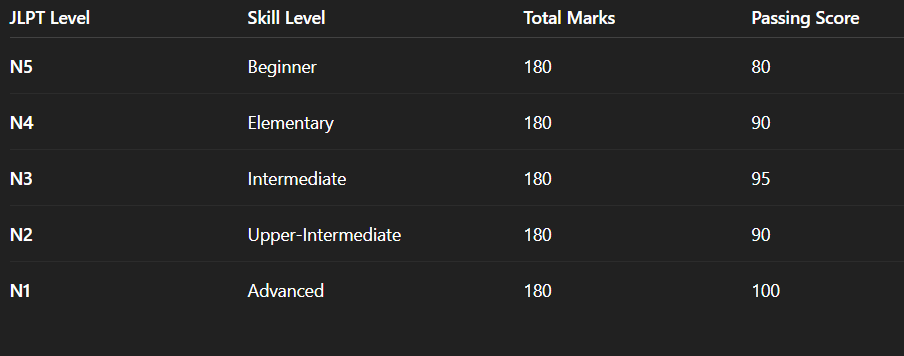
The Japanese-Language Proficiency Test (JLPT) measures a learner’s ability through five levels, from beginner to advanced. Each level has a defined score range, and candidates must meet both sectional and overall passing marks.
Reading Module
Unravel the complexities of written texts in the PTE Reading module, where diverse passages test your comprehension skills. From articles and essays to infographics, this segment evaluates your ability to interpret information, identify key ideas, and draw inferences. Sharpen your reading prowess as you navigate through a spectrum of written materials, showcasing your proficiency in handling diverse textual formats.
Each category is scored individually, and the overall score is the sum of these three section scores.
| Score Range | Score Meaning |
|---|---|
| 90-100 | Expert User |
| 80-89 | Very Good User |
| 70-79 | Good User |
| 60-69 | Modest User |
| 50-59 | Limited User |
| 10-49 | Low User |
The Japanese-Language Proficiency Test (JLPT) is an internationally recognized exam designed to evaluate non-native speakers’ ability to understand Japanese. The test assesses vocabulary, grammar, reading, and listening skills across five levels, from beginner (N5) to advanced (N1). JLPT does not include speaking or writing tests, focusing instead on practical language comprehension. A passing result requires meeting both overall and sectional score requirements, making it a reliable measure of Japanese language proficiency for study, work, and career opportunities.